


【国際文化学部】メイヨーゼミの古墳調査 Christopher Mayo's Seminar Students Study Two Kofun
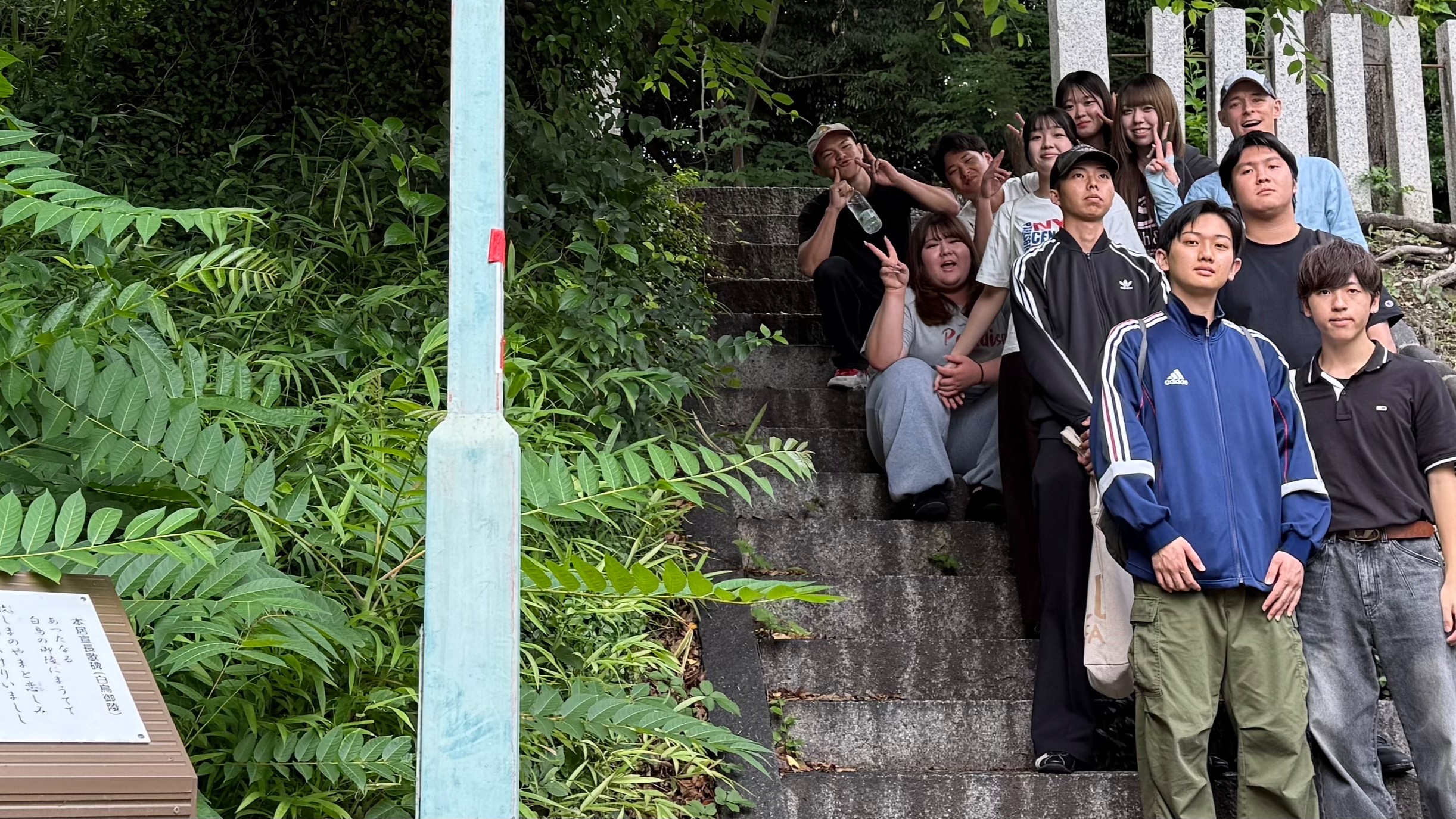
2026年6月9日(火)、国際文化学部のメイヨーゼミ生11名が、大学近くにある白鳥(しろとり)古墳と断夫山(だんぷさん)古墳でフィールドワークを行いました。
On Tuesday, June 9, 2026, eleven students in Professor Mayo’s seminar in the Faculty of Intercultural Studies did fieldwork at the Shirotori tomb mound and Danpusan tomb mound near the university.
目的 Objective
今回の目的は、現地にある案内板、配布資料、地図、伝承、考古学的な説明を照らし合わせながら、調査のしかたを学ぶことでした。学生たちは二つの古墳を歩いて見学し、それぞれの規模、築造時期、現在の管理、見学者への説明のされ方などを確認しました。
The purpose of the fieldwork was to learn how to do research at a historical site. Students compared signs, handouts, maps, local stories and archaeological explanations. They walked around the two kofun and checked their size, date, present management and how each site is explained to visitors.
白鳥古墳 Shirotori Kofun
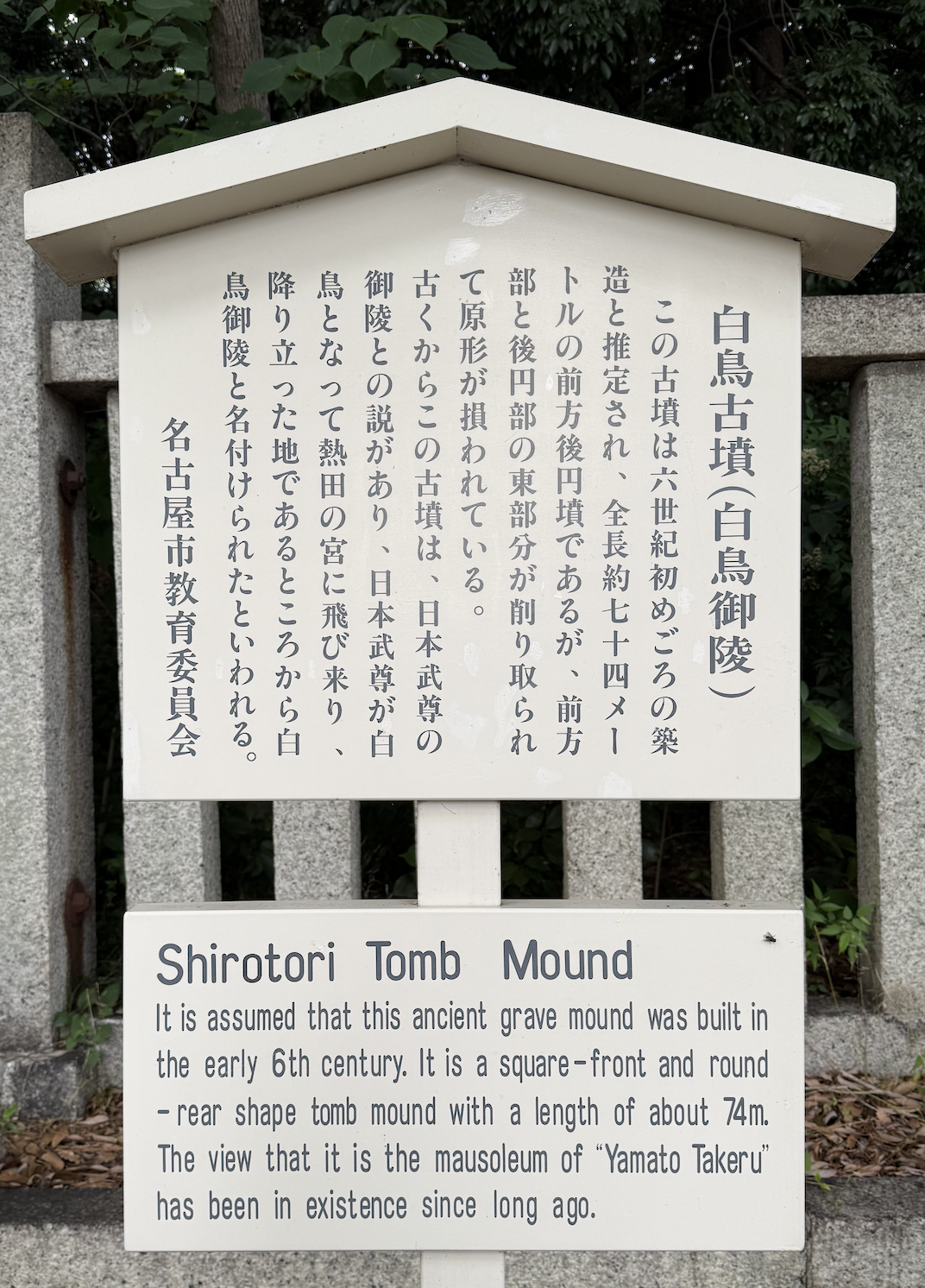
白鳥古墳は、名古屋市熱田区白鳥にある前方後円墳です。全長約74メートル、6世紀初め頃の築造と説明されています。古くは日本武尊の墓と伝えられてきたため、「白鳥御陵」(しらとりのみささぎ)とも称されますが、現在では尾張氏に関係する墓と考えられています。
Shirotori Kofun is a keyhole-shaped tomb mound in Shirotori, Atsuta Ward, Nagoya. It is about 74 meters long and may have been made around the early sixth century. In the past, people said it was the tomb of Prince Yamato Takeru. For this reason, it is also called Shiratori no Misasagi.
現地には江戸時代の国学者である本居宣長の歌碑もあります。白鳥古墳は、古墳としてだけでなく、後世の国学や地域の伝承の中でも語られてきた場所です。
Today, it is usually seen as a tomb connected with the Owari clan. There is also a monument with a poem by the Edo-period nativist (kokugaku) scholar Motoori Norinaga at the site. Shirotori Kofun is a kofun, but it has also been explained through later kokugaku research and local stories.

断夫山古墳 Danpusan Kofun
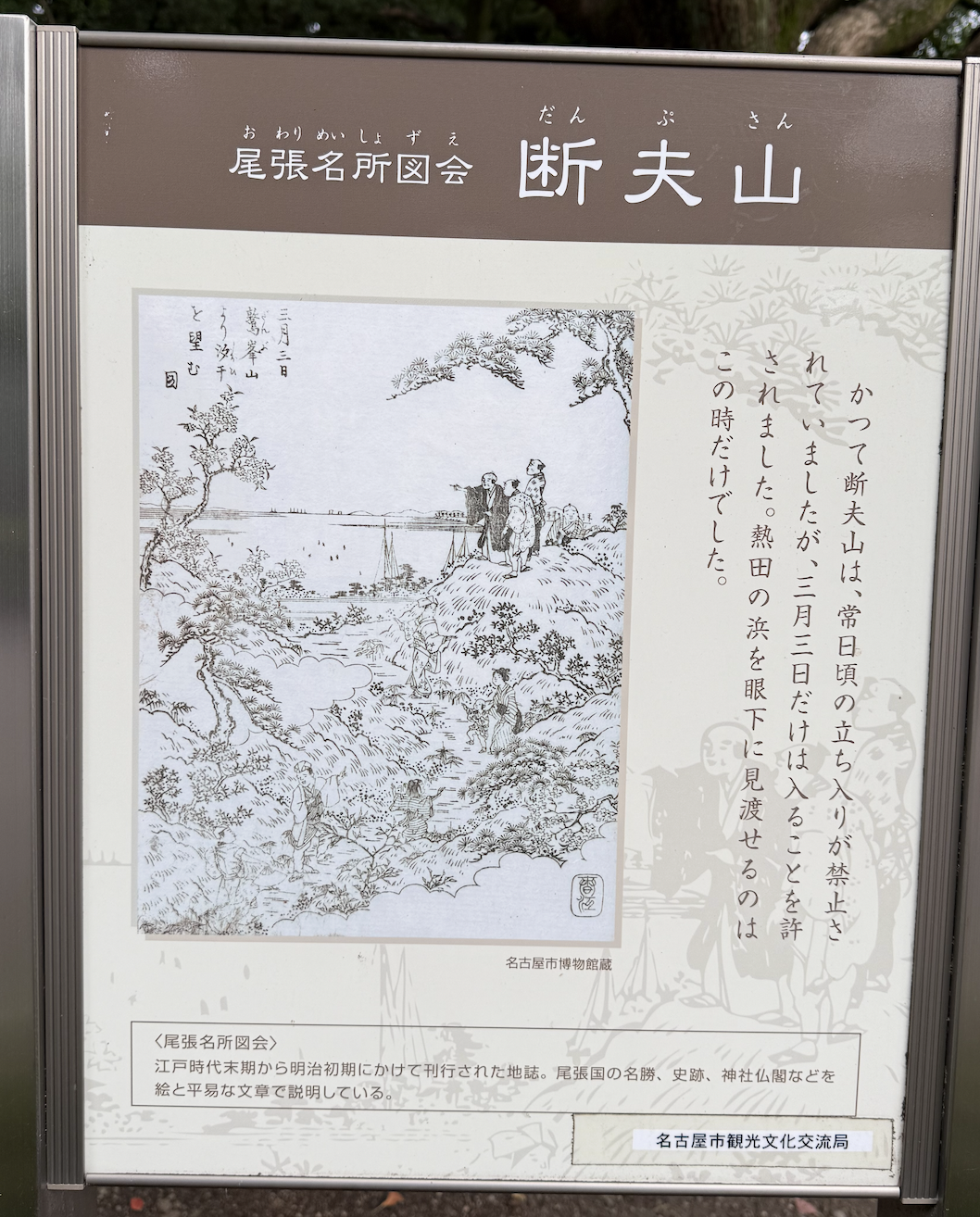
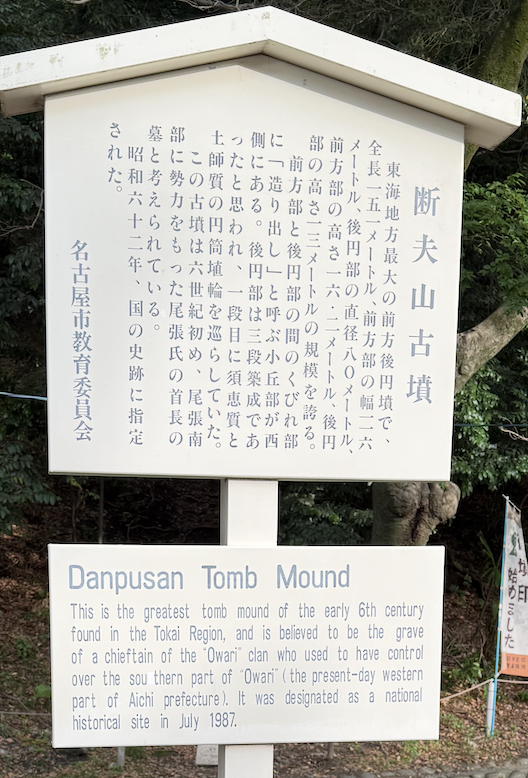
断夫山古墳は、熱田神宮公園の中にある大型の前方後円墳です。全長約151メートルとされ、東海地方最大の前方後円墳と紹介されています。1987年に国の史跡に指定されました。
Danpusan Kofun is a large keyhole-shaped tomb mound in Atsuta Jingu Park. It is about 151 meters long and is introduced as the largest keyhole-shaped kofun in the Tokai area. It became a National Historic Site in 1987.
断夫山古墳は、古くから日本武尊の妻の一人である宮簀媛の墓と伝えられてきました。伝承では、日本武尊が白鳥となって飛び去った後、その日本武尊を思いながら亡くなった宮簀媛の墓が断夫山古墳である、と説明されています。一方で、古墳の規模、墳形、わずかな出土品などから、現在では尾張氏の墳墓とみる見解が有力です。ここでも、古墳そのものについて言えることと、後世の物語として語られてきたことを分けて考える必要があります。
Danpusan Kofun has long been connected with Miyazuhime, a wife of Yamato Takeru. According to the story, Yamato Takeru became a white bird and flew away. Miyazuhime died while mourning him, and Danpusan Kofun was said to be her tomb. Today, however, many explanations see the kofun as a tomb of the Owari clan. This is based on its size, shape and the few objects found there. Here too, students had to think about the difference between the kofun itself and later stories about it.
「いつ、どこで、どの文脈で」When, Where, and in What Context?

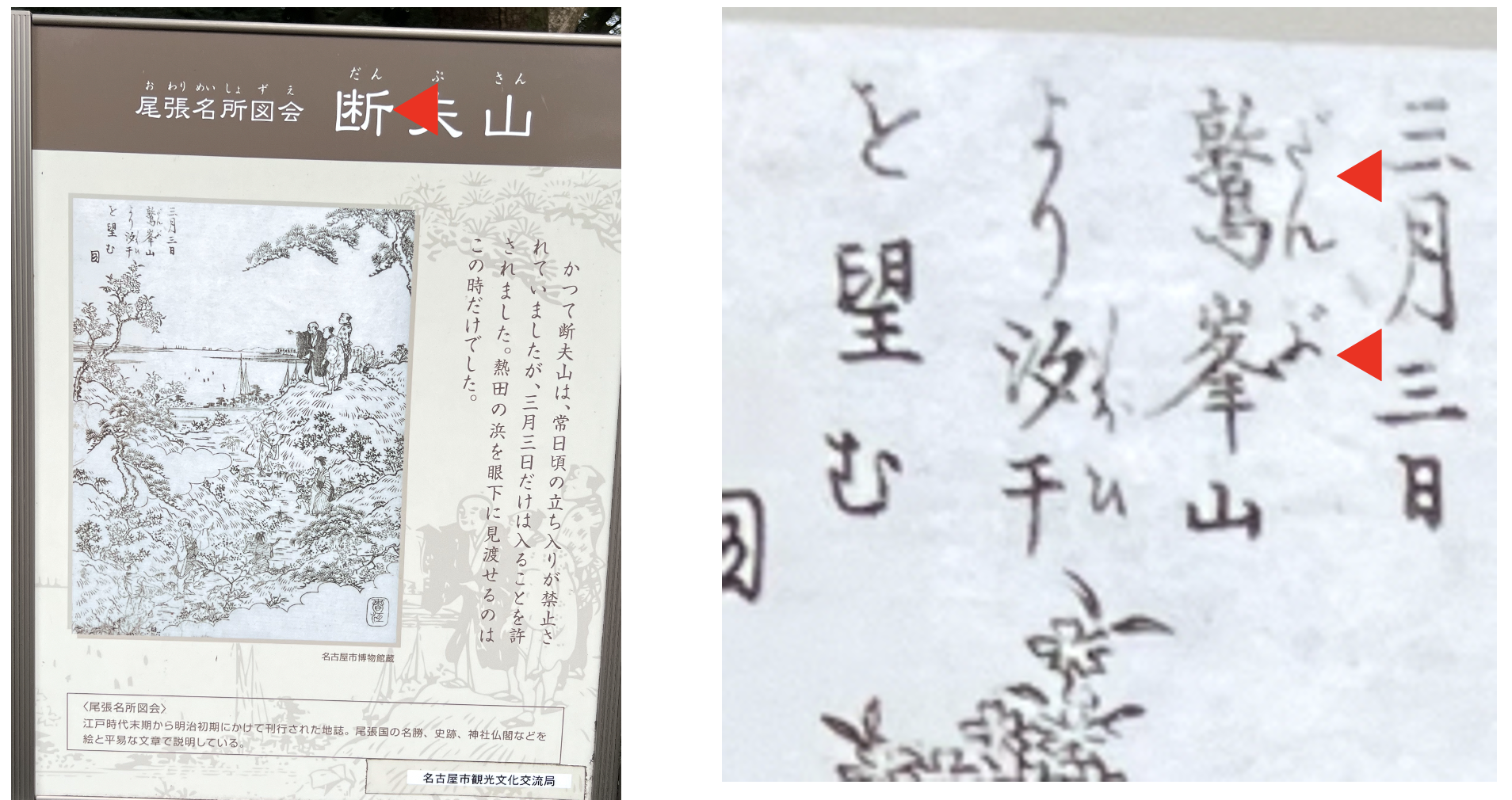
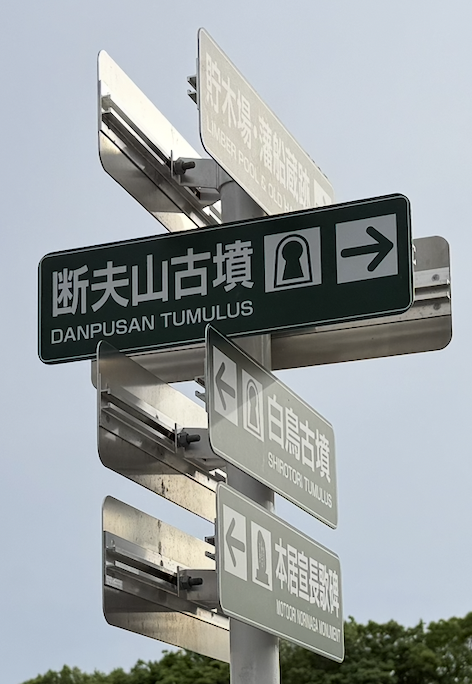
今回のフィールドワークでは、読み方にも注目しました。現地の道路標識や案内板には、白鳥古墳の英語表記として “SHIROTORI TUMULUS” が使われています。一方、資料によっては「しらとり」(本居宣長)と読ませる例もあります。
In this fieldwork, students also looked at names and readings. Road signs and signs at the site use the English name “SHIROTORI TUMULUS” for 白鳥古墳. But some sources, including Motoori Norinaga’s poem, read the name as “shiratori.”
漢字の読み方、特に地名に関しては、「どう読むか」だけでなく、「いつ、どこで、どの文脈で、どのように読まれているか」も大切です。学生たちは、読み方の違いを表記のゆれとして片づけるのではなく、資料の性格や設置者、説明の目的とあわせて考えました。学生たちは、現在の標識、観光案内、古い地誌、考古学的な説明を比べながら、一つの場所が複数の言葉で説明されていることを確認しました。
For place names, the question is not only “how do we read this?” It is also “when, where and in what context was this reading used?” Students thought about the reading together with the type of source, who made the sign or text and why it was made. By comparing present signs, tourist information, older local writing and archaeological explanations, students saw that one place can be explained in several ways.
ヤマトタケル伝承 Stories about Yamato Takeru
熱田神宮との関係も、考えるべき点です。草薙剣、宮簀媛、白鳥伝承、古墳の管理や所有の歴史は互いに関係しますが、それぞれ同じ問題ではありません。学生たちは、現地で見た情報をもとに、神話、伝承、史跡、地域の記憶がどのように重なっているのかを考えました。
The relationship with Atsuta Shrine is also important. The Kusanagi sword, Miyazuhime, the white bird story and the history of kofun management are connected. But they look at it with different questions. Students used what they saw at the sites to think about how myth, legend, historical sites and local memory overlap.
発表 Presentations
次回のゼミでは、今回のフィールドワークについて学生による短い発表を行います。発表では、二つの古墳の比較、案内板や資料の違い、ヤマトタケル伝承との関係、宮簀媛の語られ方など、それぞれの視点から調査結果を報告する予定です。
In the next seminar class, students will give short presentations about the fieldwork. They will report on the two kofun, the signs and sources, the Yamato Takeru legend and the way Miyazuhime is described.
発表の準備では、資料によって説明がどう違うのか、その違いから何が言えるのかも意識してもらいます。学生たちは、たとえば次のような問いから一つ、または複数を選び、自分の発表につなげていきます。
In preparing their presentations, students are encouraged think about how different sources explain the same place in different ways, and what these differences can tell us. Students may choose one or more of the following questions for their presentations.
(1)古墳群と三重県との関係は何か。ヤマトタケル伝承の中で、「三重」県の能褒野、白鳥古墳、断夫山古墳はどのようにつながっているか。 What is the connection between these kofun and "Mie" Prefecture? In the Yamato Takeru story, how are Nobono in Mie, Shirotori Kofun and Danpusan Kofun connected?
(2)古墳群とヤマトタケル伝承との関係は何か。案内板などを手がかりに、古墳そのものについて言えることと、後世の伝承として語られてきたことを分けて説明してみよう。
What is the connection between the kofun and the Yamato Takeru story? Using signs and other sources, explain what we can say about the kofun themselves and what was told later as legend.
(3)白鳥古墳の読みは「しらとり」「しろとり」「はくちょう」のどれだろうか。資料によって読みが違う場合、その違いは何を示しているか。 How should 白鳥古墳 be read: “shiratori,” “shirotori” or “hakuchō”? If different sources use different readings, what does that show?
(4)断夫山古墳という名前は、どのような物語にもとづいて説明されているか。その説明は、考古学的な説明と同じものだろうか。
What story is used to explain the name Danpusan Kofun? Is that story the same as the archaeological explanation?
(5)熱田神宮との関係は何か。草薙剣、宮簀媛、白鳥伝承、古墳の管理や所有の歴史を分けて考えてみよう。
What is the connection with Atsuta Shrine? Think separately about the Kusanagi sword, Miyazuhime, the white bird story and the history of who managed or owned the kofun.
(6)なぜ案内板が複数あるのか。それぞれの案内板は、誰に向けて、何を説明しようとしているのか。設置者や管轄も確認してみよう。
Why are there several signs? Who is each sign for, and what is it trying to explain? Also check who made the signs and who manages them.
(7)二つの古墳を比べると、何が似ていて、何が違うか。規模、築造時期、伝承、現在の管理、見学者への説明の仕方を比べてみよう。
When we compare the two kofun, what is similar and what is different? Compare their size, date, stories, present management and how they are explained to visitors.
(8)大衆文化におけるヤマトタケル伝承では、どの部分が強調され、どの部分が省かれているか。それは時代によってどのように変わってきたか。たとえば、『ヤマトタケル』(角川コミックス・エース)などを参考にしてもよいです。
In popular culture, what parts of the Yamato Takeru story are emphasized, and what parts are left out? How has this changed over time? Students may also use works such as Yamato Takeru from Kadokawa Comics Ace.
(9)案内板やヤマトタケル伝承を女性の視点から見ると、何が見えやすくなり、何が見えにくくなるだろうか。宮簀媛や弟橘媛がどのように語られているか、また、その語り方にどのような前提があるかを考えてみよう。
If we look at the signs and the Yamato Takeru story from women’s perspectives, what becomes easier to see, and what becomes harder to see? Think about how Miyazuhime and Ototachibanahime are described, and what ideas are behind those descriptions.
(2)古墳群とヤマトタケル伝承との関係は何か。案内板などを手がかりに、古墳そのものについて言えることと、後世の伝承として語られてきたことを分けて説明してみよう。
What is the connection between the kofun and the Yamato Takeru story? Using signs and other sources, explain what we can say about the kofun themselves and what was told later as legend.
(3)白鳥古墳の読みは「しらとり」「しろとり」「はくちょう」のどれだろうか。資料によって読みが違う場合、その違いは何を示しているか。 How should 白鳥古墳 be read: “shiratori,” “shirotori” or “hakuchō”? If different sources use different readings, what does that show?
(4)断夫山古墳という名前は、どのような物語にもとづいて説明されているか。その説明は、考古学的な説明と同じものだろうか。
What story is used to explain the name Danpusan Kofun? Is that story the same as the archaeological explanation?
(5)熱田神宮との関係は何か。草薙剣、宮簀媛、白鳥伝承、古墳の管理や所有の歴史を分けて考えてみよう。
What is the connection with Atsuta Shrine? Think separately about the Kusanagi sword, Miyazuhime, the white bird story and the history of who managed or owned the kofun.
(6)なぜ案内板が複数あるのか。それぞれの案内板は、誰に向けて、何を説明しようとしているのか。設置者や管轄も確認してみよう。
Why are there several signs? Who is each sign for, and what is it trying to explain? Also check who made the signs and who manages them.
(7)二つの古墳を比べると、何が似ていて、何が違うか。規模、築造時期、伝承、現在の管理、見学者への説明の仕方を比べてみよう。
When we compare the two kofun, what is similar and what is different? Compare their size, date, stories, present management and how they are explained to visitors.
(8)大衆文化におけるヤマトタケル伝承では、どの部分が強調され、どの部分が省かれているか。それは時代によってどのように変わってきたか。たとえば、『ヤマトタケル』(角川コミックス・エース)などを参考にしてもよいです。
In popular culture, what parts of the Yamato Takeru story are emphasized, and what parts are left out? How has this changed over time? Students may also use works such as Yamato Takeru from Kadokawa Comics Ace.
(9)案内板やヤマトタケル伝承を女性の視点から見ると、何が見えやすくなり、何が見えにくくなるだろうか。宮簀媛や弟橘媛がどのように語られているか、また、その語り方にどのような前提があるかを考えてみよう。
If we look at the signs and the Yamato Takeru story from women’s perspectives, what becomes easier to see, and what becomes harder to see? Think about how Miyazuhime and Ototachibanahime are described, and what ideas are behind those descriptions.
大学のすぐ近くにある史跡でも、実際に歩き、読み、比べてみると、まだ気づいていなかった問いが出てきます。今回のフィールドワークは、古墳について学ぶ機会であると同時に、資料をどう読み、現地で何を確認するのかを学ぶ機会にもなりました。
Even historical sites very close to the university can raise new questions when we walk, read and compare. This fieldwork was a chance to learn about kofun. It was also a chance to learn how to read sources and what to check at the site.